Food Poisoning in Rhodes: What Tourists Should Do
Medically reviewed by Giannis Michailidis
General Practitioner
What Is Food Poisoning and Why Does It Happen During Holidays?
Food poisoning in Rhodes usually refers to acute gastroenteritis or traveler’s diarrhea caused by contaminated food, unsafe water, ice, poor hand hygiene, or sudden dietary changes during travel. It is one of the most common travel-related illnesses worldwide and can begin suddenly with diarrhea, vomiting, stomach cramps, nausea, weakness, or mild fever. For most healthy adults it is short-lived, but it can quickly ruin a holiday and sometimes lead to dehydration, especially when vomiting is repeated or fluid intake is poor.
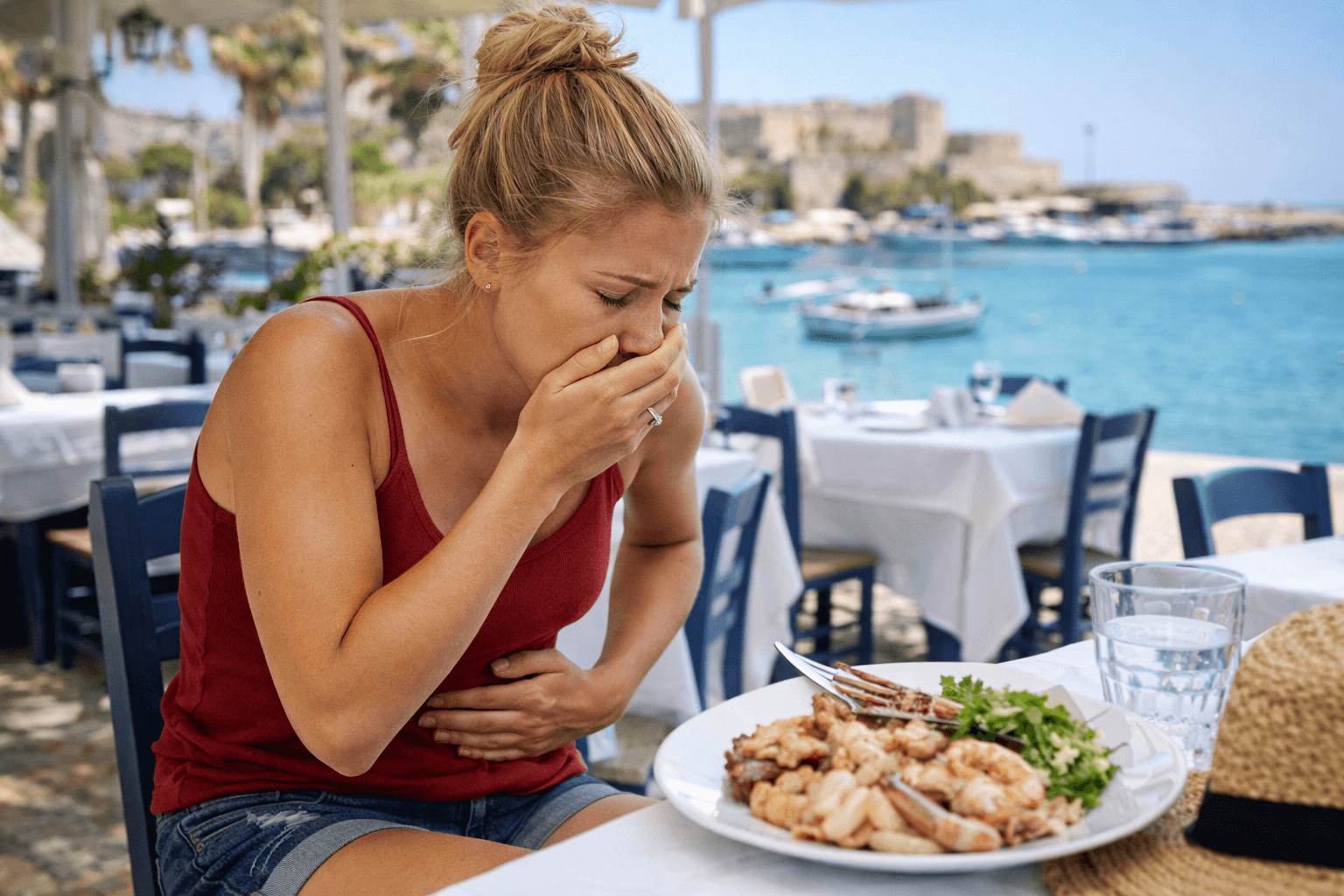
Meals eaten in hot weather or after long buffet exposure can increase the risk of gastrointestinal symptoms during travel.
A visitor dining outdoors by the sea in Rhodes, illustrating how food handling, heat, and travel routines can contribute to stomach upset during holidays.
Image source: Rhodes Medical Services
Common Symptoms of Food Poisoning in Tourists
The most common symptoms are diarrhea, vomiting, abdominal cramps, bloating, nausea, weakness, and fever. Some tourists feel well in the morning and become suddenly unwell later the same day, especially after eating buffet food, seafood, improperly stored meals, or drinking untreated water. In many cases, symptoms improve within a few days, but persistent diarrhea, repeated vomiting, and poor oral intake can increase the risk of dehydration and the need for medical assessment.
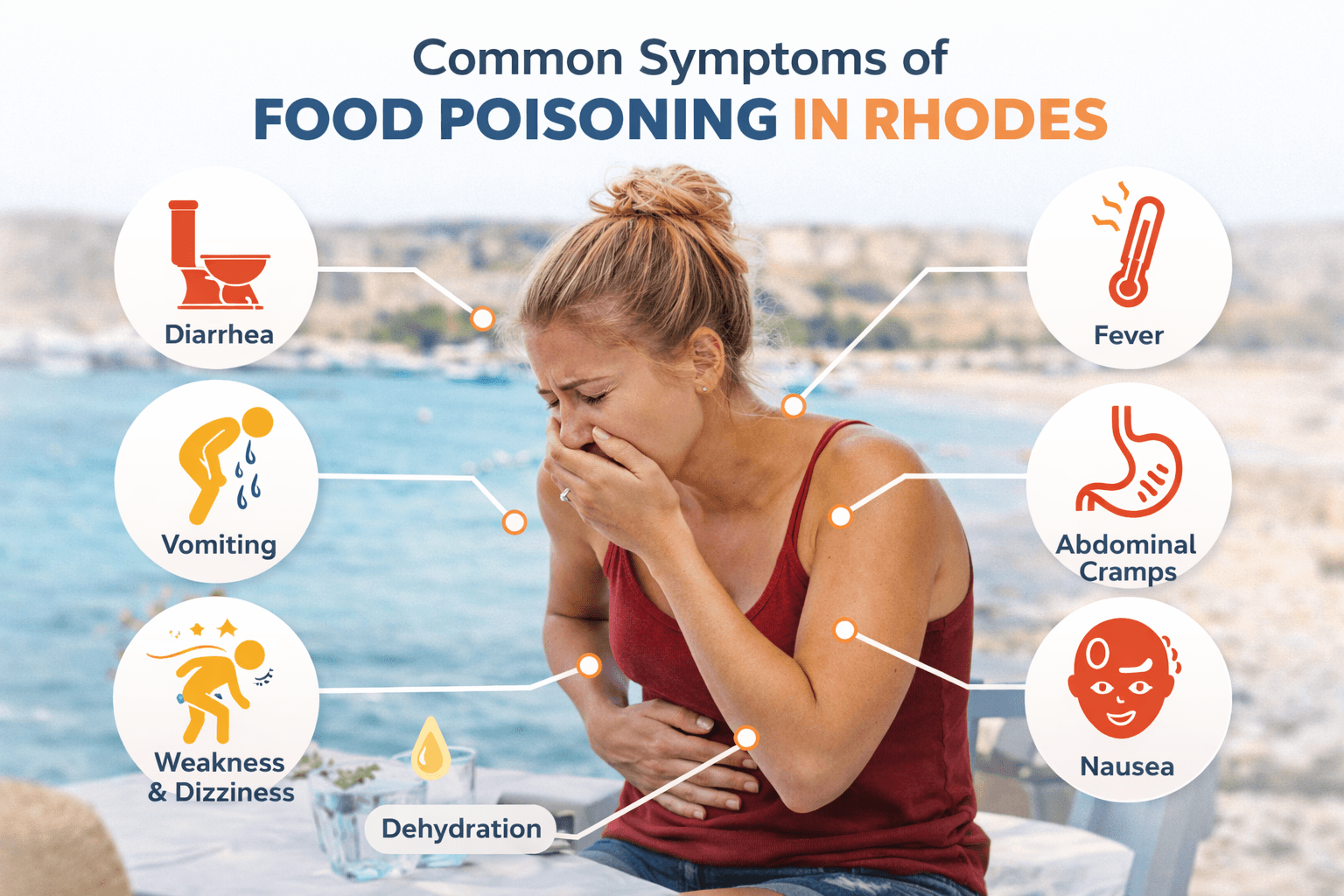
Vomiting, diarrhea, stomach cramps, and weakness are common early warning signs that travelers should not ignore.
Illustration of a traveler feeling unwell with gastrointestinal symptoms, used to represent the common presentation of food poisoning and dehydration risk.
Image source: Rhodes Medical Services
What To Do First If You Have Diarrhea or Vomiting in Rhodes
If symptoms are mild, the first priority is hydration. Drink small, frequent amounts of water or oral rehydration solution, avoid alcohol, and keep food simple until the stomach settles. Rest is important, and many mild cases improve without major treatment, but ongoing vomiting can make dehydration worse because the body cannot replace lost fluids and electrolytes properly.
When To See a Doctor in Rhodes Immediately
You should seek medical help quickly if you have blood in the stool, high fever, severe abdominal pain, repeated vomiting, inability to keep fluids down, dizziness when standing, very dark urine, little urination, fainting, or signs of significant dehydration. Medical review is also important if symptoms do not improve within a few days or if you are an older traveler, pregnant, or have another medical condition. In these cases, an English-speaking doctor in Rhodes can assess whether you need medication, laboratory testing, or IV fluids for dehydration.
Need an English-Speaking Doctor in Rhodes for Food Poisoning?
If you are feeling weaker, cannot keep fluids down, or need clear medical advice before you travel again, arrange a prompt medical review. Rhodes Medical Services can help you access a trusted doctor quickly, whether you need assessment at your accommodation or in a clinic, along with practical guidance, prescriptions, and documentation if required.
Related Medical Care
Based on what you just read about Food Poisoning in Rhodes: What Tourists Should Do, our General Practice team can assess your symptoms and recommend the right next step.
Giannis Michailidis — General Practitioner
Need Medical Help in Rhodes?
Book your appointment in minutes and get fast professional care.